


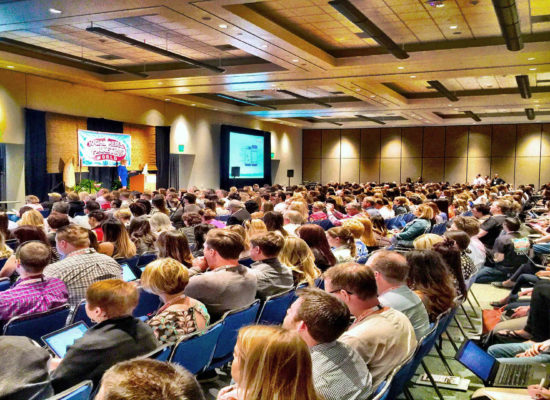
The International Sunbelt Social Network Conference (SunBelt), formerly the Sunbelt/Sun Belt Social Network Conference, is the official conference of the International Network for Social Network Analysis (INSNA) since 1997 (?). From 1989-2007 the bi- and triennial European Social Network Conference (EC-SNA) took place supplementary and in conjunction with Sunbelt. SunBelt provides an
Cape Town Knowledge Representation and Reasoning Symposium (Cape-KR)*
The International Conference on the Principles of Knowledge Representation and Reasoning (KR) is a leading forum for timely, in-depth presentation of progress in the theory and principles underlying the representation and computational management of knowledge. Until 2020 KR was a biennial conference. Since 2024 KR is “supplemented” by the
International Conference on Organizational Learning, Knowledge and Capabilities (OLKC)**
The annual International Conference on Organizational Learning, Knowledge and Capabilities (OLKC) provides a meeting point for scholars and practitioners interested in the field of Organizational Learning, Knowledge and Capabilities. A growing, international, diverse and dynamic community every year welcomes leading scholars, young researchers, and scholar-practitioners to present and discuss their research and practice.
International Conference on Knowledge, Culture and Change in Organisations*
The International Conference on Knowledge, Culture and Change in Organisations (Espanol: Congreso Internacional de Conocimiento, Cultura y Cambio en Organizaciones; antes: Congreso Internacional de Economía y Gestión de las Organizaciones), formerly branded as “The Management Conference” or “Conference on Management”, organized by the Common Ground Organization Studies Research Network, is addressing ‘knowledge’, ‘culture’ and ‘change’
Colloque International sur la Veille Informationnelle et Gestion des Connaissances dans les Organisations (VEIGECO)
Le Colloque International sur la Veille Informationnelle et Gestion des Connaissances dans les Organisations (VEIGECO) est organisé par le groupe de recherche Veille Informationnelle et Gestion des Connaissances (VEIGEC) de l’unité de recherche Bibliothèque Numérique et Patrimoine (BNP) de l’Institut Supérieur de Documentation (ISD-Université de la Manouba-Tunis). Ce colloque est une occasionpour